
WellDiver
LoadCompleteAdventure
4.3316.00 Reviews
- Version
- 0.14.0
- Installs
- 100.00K
- Age Rating
- Everyone
Screenshots
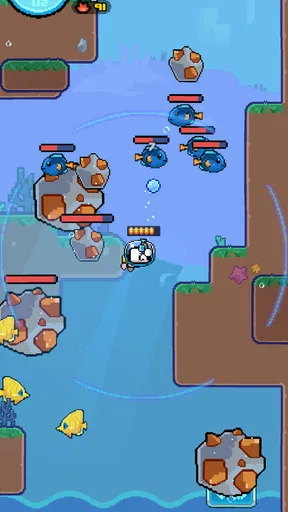
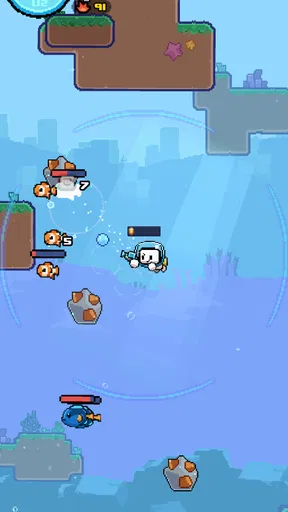
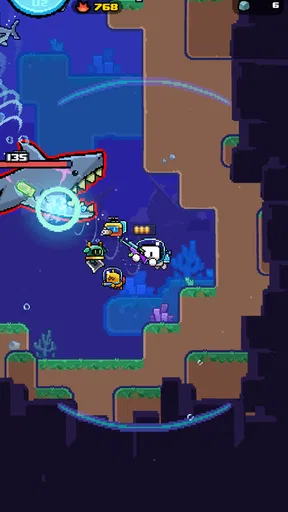

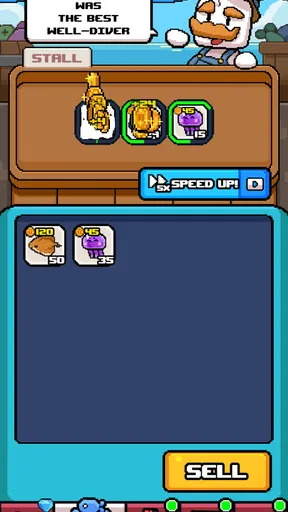

Our Review of WellDiver
 Analysis by Appyee
Surviving at sea is a strong starting point for an adventure game because it creates pressure immediately: every choice feels connected to distance, danger, and the hope of finding a way out. That is the feeling I get from WellDiver, a free game from LoadComplete that puts extreme ocean survival at the center of its experience. I approached it less like a quick arcade distraction and more like a compact test of decision-making, where staying alive matters as much as moving forward.
The game is listed for Everyone, which makes it an approachable choice for families and younger players who enjoy adventure without needing a mature setting. It runs on Android devices using version 8.0 or later, and the current version is 0.12.2. The audience response is encouraging: it holds a 4.7 average from around 312 ratings, while its install count has passed 10K+. Those figures suggest a promising early reception, although I would still treat the game as a developing experience rather than a long-established classic.
What the ocean survival loop feels like
My first impression is that the appeal depends on how comfortable you are with repetition. Ocean survival games rarely work by giving the player one dramatic challenge and then ending the journey. Their pleasure comes from gradually understanding risk, recognizing patterns, and making slightly better decisions each time. WellDiver is most interesting when I play it with that mindset. I am not simply trying to reach the next moment; I am trying to learn what makes a run collapse and what I can change before starting again.
The escape objective gives the adventure a clear direction. Instead of feeling like an open-ended setting with no purpose, the ocean becomes a place I need to overcome. That distinction matters. A survival game can become tiring when collecting or movement feels disconnected from a meaningful goal. Here, the central idea of conquering the ocean and getting away gives each attempt a natural question: how far can I push the run before pressure turns a good situation into a bad one?
I found that the best way to approach the game is to resist the urge to rush simply because the destination is visible or implied. Survival action rewards patience, and the ocean setting makes careless momentum feel especially costly. I prefer to pause mentally before committing to a risky move, consider what I have already gained, and decide whether progress is worth exposing the run. That habit is more useful than treating every obstacle as something to overpower immediately.
This also makes the game suitable for short sessions. I can play when I have a few spare minutes, focus on one attempt, and stop without needing a large block of uninterrupted time. At the same time, the survival structure gives me a reason to return later. A failed attempt is not automatically wasted if it teaches me how to handle a particular kind of pressure more calmly the next time.
Progress feels better when I treat each attempt as information
One of the less obvious strengths of this kind of design is that failure can be useful without being rewarding in the traditional sense. When a run ends, I can think about the sequence that led there: did I take a shortcut, react too late, or spend attention on the wrong threat? That reflection turns a difficult session into a practical lesson. I recommend new players avoid changing everything at once. Adjusting one decision at a time makes it easier to understand whether a new approach actually helps.
A realistic everyday use case is a short commute or a break between tasks. I would not choose WellDiver when I need a completely relaxing game with no mental commitment, but I would choose it when I want something that occupies my attention without requiring a long story to remember. One attempt can provide a complete little arc: preparation, rising danger, a risky decision, and either escape or another lesson.
The trade-off is that players who dislike restarting may find the survival rhythm frustrating. If you want constant character growth, a large collection of permanent unlocks, or a narrative that advances after every few minutes, this may not be the right adventure for you. Its satisfaction comes from improving your play, not from assuming that the game will always soften the consequences of a mistake.
Where spending enters the decision
WellDiver is free to download, but it includes in-app purchases ranging from $1.99 to $49.99 per item. That is the important spending context for anyone deciding whether to try it. The presence of purchases does not, by itself, tell me whether progress is fair or whether buying is necessary. I would judge those questions through actual play: whether the free route remains enjoyable, whether paid items remove meaningful challenge, and whether the game creates pressure to spend at moments when a run is already difficult.
Because the purchase range is broad, I would recommend a cautious approach. I would play enough to understand the basic survival loop before considering any optional transaction. A player should know what problem a purchase solves and whether that problem is genuinely bothersome. Spending simply because a difficult run ended badly is usually a poor decision, especially in a game where learning from failure is part of the intended appeal.
For parents, the Everyone age rating makes the content approachable, but the purchase system still deserves attention. I would use the device's purchase controls and discuss spending expectations before handing the game to a child. The age label describes suitability of content; it does not automatically answer whether every purchase is good value or whether a young player will understand the difference between optional help and necessary progress.
Fairness matters more than the size of the purchase menu
When I think about competitive fairness, I separate two ideas. The first is whether players are competing directly against one another. The second is whether the game creates a personal contest between the player and its obstacles. The available information presents WellDiver as an adventure survival game, so my main fairness concern is the second kind: whether spending changes the challenge in a way that makes success feel bought rather than earned.
I would be comfortable with optional purchases if the free experience lets me understand the systems, make meaningful progress, and improve through practice. I would be less comfortable if the game repeatedly interrupts a run with strong pressure to buy, or if the most satisfying route is placed behind spending before I have had time to learn the basics. That is why my recommendation is to delay purchases until the game has shown its normal rhythm.
A useful personal rule is to compare every paid option with the actual reason I am considering it. If I want it because it adds convenience, I can ask whether convenience improves my enjoyment or merely shortens the part of the game I am still learning. If I want it because I feel stuck, I should first replay with a different strategy. In an ocean survival game, the second attempt often teaches more than an immediate shortcut.
This approach also protects the game's competitive character, even when the competition is mainly with the environment. I want a successful escape to feel connected to my decisions. If a purchase simply removes the need to understand danger, it may provide temporary relief while weakening the part of the game that makes survival meaningful.
What I would check before committing to long-term play
The current version and early reception make WellDiver worth trying, but I would not assume that a promising start answers every long-term question. A smaller install base can mean the community is still forming, and an early version can change the balance or pacing over time. I would pay attention to how consistently the game runs on my device, whether the controls remain comfortable after several sessions, and whether the survival loop continues to offer new decisions rather than repeating the same opening.
I would also watch how the game handles spending during ordinary play. The listed purchase range tells me that optional transactions are part of the experience, but it does not tell me how frequently they appear, what each item does, or whether they affect the core challenge. Those are important practical questions, and I would answer them through direct use rather than guessing from the presence of a price range.
Another point I would consider is session fatigue. Ocean survival can create tension, but tension loses its effect if every attempt feels identical. I look for small differences in how I approach a run: a new route, a different response to danger, or a better understanding of when to preserve momentum. If I stop learning, I know I am probably no longer getting much from the game, regardless of its rating.
That makes the game a better fit for players who enjoy experimentation than for players who need a predictable reward schedule. I would recommend it to someone who likes asking, “What should I do differently next time?” I would skip it for a friend who wants a calm exploration game, a deep role-playing system, or a purely story-driven adventure with minimal repetition.
How it compares with familiar adventure choices
Compared with a conventional story adventure, WellDiver places more emphasis on immediate survival pressure and less on simply following a sequence of scenes. The ocean setting naturally makes positioning and timing feel important, while a traditional narrative game may be more generous about mistakes so that the story can continue. I prefer WellDiver when I want my decisions to carry short-term consequences rather than just move me to the next dialogue or objective.
Compared with a relaxed exploration game, it is a more demanding choice. Exploration usually invites me to wander and enjoy the environment, while survival asks me to manage risk and accept that a run can go wrong. That difference is useful when choosing what to play after a busy day. If I want to decompress, a gentler alternative may be better. If I want focused attention and a clear challenge, the ocean survival format has more bite.
It also differs from a purely competitive action game because its appeal does not depend only on defeating another player. The pressure comes from overcoming the situation itself. That can make it friendlier for someone who enjoys action but dislikes online rivalry. On the other hand, players who need leaderboards, direct matches, or a strong social layer may find the experience less compelling than a dedicated competitive title.
The most important comparison is with other free adventure games that use purchases. WellDiver deserves a fair trial because its central idea is easy to understand and its rating is strong, but I would not choose it solely because it is free. The better question is whether its survival decisions hold my attention without making spending feel like the main solution. For me, that is the line between a game I revisit and one I remove after a few sessions.
My practical advice for starting well
I would begin with a learning session rather than trying to achieve a perfect escape immediately. Pay attention to what usually causes trouble, and avoid treating every available opportunity as something that must be taken. In survival games, preserving a stable situation is often more valuable than chasing a small advantage.
I would also keep the first few attempts free of purchases. This is not because every purchase is automatically bad; it is because understanding the baseline makes value easier to judge. Once I know how the game feels without assistance, I can decide whether an optional item adds enjoyment or merely covers a frustration that I have not yet learned to manage.
For touch-screen play, I would choose a comfortable grip and avoid playing while distracted. A game built around survival action can punish divided attention more than a turn-based adventure. If I am playing during a short break, I would start a fresh attempt only when I have enough time to finish that attempt thoughtfully rather than abandoning it halfway through.
Finally, I would judge progress by better decisions, not only by distance or successful escapes. That mindset keeps the game from becoming a simple win-or-lose test. It also reveals whether the design is working for me: if I can identify why I improved, I am engaged; if the outcome feels random or dependent on spending, my interest will fade quickly.
My verdict on the free ocean adventure
WellDiver is worth trying if you enjoy survival action that asks you to learn through pressure. LoadComplete has chosen a clear adventure premise, and the free entry point makes it easy to see whether the ocean challenge suits your taste. Its Everyone rating broadens the audience, while the positive 4.7 average gives the game a reassuring first impression.
I would recommend it to players who like short, repeatable attempts, careful risk-taking, and the satisfaction of turning a failed run into a better one. It can fit neatly into a spare part of the day, but it is not mindless background entertainment. The player needs to pay attention, accept setbacks, and decide when ambition has become recklessness.
I would be more cautious with anyone who dislikes repetition, expects a fully relaxed adventure, or wants a long-term progression system to carry the experience. I would also advise every player to understand the free loop before spending, since purchases run from $1.99 to $49.99 per item and the practical value of those options depends on how they affect personal enjoyment.
My final view is positive but measured. The game has a focused identity, a welcoming age rating, and enough survival tension to make repeated attempts meaningful. Its strongest quality is the way it encourages me to think about decisions rather than simply react. Try it first as a test of your own patience and strategy, then decide whether its ocean is somewhere you genuinely want to keep exploring.
Privacy and Permissions
See what permissions an app requests and how it handles your data.
- Wi-Fi connection information
- view Wi-Fi connections
- Other
- view network connections, full network access, run at startup, control vibration, prevent device from sleeping, Google Play license check
Verdict
Strengths of WellDiver
- Simple interface makes wellness tracking easy to understand.
- Useful reminders can help users maintain consistent healthy habits.
- Progress views make it easier to notice changes over time.
- Suitable for beginners who want guidance without complex features.
- Supports a more structured approach to personal wellbeing goals.
Limitations of WellDiver
- Some features may require creating an account or sharing personal data.
- Wellness recommendations may feel too general for specific health needs.
- Limited functionality may not satisfy users seeking advanced tracking tools.
- Regular reminders could become repetitive or intrusive for some users.
- It should not replace professional medical advice or treatment.
Other Releases by LoadComplete
View All
Legend of Slime: Idle RPG War
Adventure3.9

Mini Tales
Role Playing4.5
Similar Picks in This Category
View All
Roblox
Roblox Corporation4.2

Pokémon GO
Niantic, Inc.3.5

Ninja warrior: legend of adven
TOH Games4.6

Ninja Arashi
Black Panther4.6

Eyes - The Horror Game
Fearless Games sp. j.4.5

Critical Action:Gun Strike Ops
FPS Shooter & Action Game4.3
Frequently Asked Questions
What is WellDiver, and what can I use it for?
WellDiver is a wellness-focused app designed to help users explore and improve different areas of their daily well-being. Depending on the features available in your version, it may provide tools for tracking habits, monitoring personal goals, accessing educational content, or following guided wellness activities. It is best used as a supportive companion rather than a replacement for professional medical advice.
Is WellDiver suitable for beginners in wellness and fitness?
Yes, WellDiver can be useful for beginners because its wellness features are generally designed to support gradual progress and regular engagement. New users should start with simple goals, explore the available sections, and avoid trying to change too many habits at once. Your experience may depend on the device, app version, and the specific programs offered in your region.
Does WellDiver require a subscription or include in-app purchases?
Before downloading WellDiver, check its current listing in the Google Play Store or Apple App Store for the latest pricing information. Some wellness apps offer basic tools for free while placing advanced programs, personalized content, or additional tracking features behind a subscription or one-time purchase. Review the payment terms carefully, especially automatic renewal and cancellation conditions.
Does WellDiver collect personal or health-related information?
WellDiver may request personal details or wellness information to personalize recommendations, save progress, or provide certain app functions. The exact data collected can change with updates, so users should read the app’s privacy policy and store disclosures before creating an account. Avoid entering sensitive information unless it is necessary, and check available permissions in your device settings.
Can WellDiver replace a doctor, therapist, or professional wellness program?
No. WellDiver should be considered a general wellness tool and not a diagnostic or treatment service. Information, reminders, activity suggestions, or progress reports within the app should not replace advice from a qualified doctor, therapist, dietitian, or fitness professional. If you have a medical condition, experience concerning symptoms, or plan major lifestyle changes, consult a professional first.
Play our best games!


